Documentation Forbidden and Accountability Blocked: Systematic Complicity Reinforces Impunity in Torture Crimes
july12, 2025
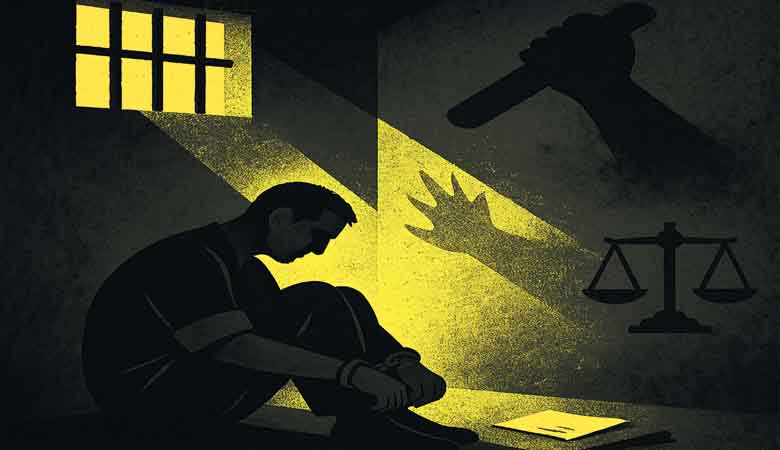
The “No Impunity – Torture Map” campaign by the Egyptian Commission for Rights and Freedoms (ECRF) launches its annual report titled “Documentation Forbidden and Accountability Blocked: Systematic Complicity Reinforces Impunity in Torture Crimes”, in conjunction with the International Day in Support of Victims of Torture. The report addresses the reality of torture in Egypt during the period from January 2024 to June 2025.
The report is issued amid escalating grave violations in places of detention in Egypt, along with the continued absence of accountability and the persistence of impunity — especially with the documentation of numerous deaths under torture, a recurring pattern of evidence concealment, witness intimidation, and the presentation of misleading official narratives.
The report is based on a qualitative and quantitative analysis of 75 cases that were monitored and documented under an extremely restrictive political and security environment. The distribution of cases shows that 50.6% occurred in 2024, while 49.3% took place in the first half of 2025, indicating that violations continued at a nearly steady rate between the two years, reflecting the absence of signs of decline or efforts to curb such practices.
The data also shows that 91% of the cases took place in official places of detention, such as prisons and police stations — placing direct legal responsibility on the state’s security and oversight bodies.
The report notes that Beheira Governorate recorded the highest percentage of documented torture cases, representing around 32% of the total cases during the reporting period. This geographic concentration suggests the possibility of a systematic pattern of violations or a notable weakness in the oversight of detention centers in the governorate.
The report also highlights the obstacles facing monitoring and documentation efforts related to torture and ill-treatment cases in Egypt, as well as the challenges impeding reporting and litigation. The testimonies documented in the report affirm that the high economic cost of litigation excludes the poorest and most vulnerable groups from accessing justice — thereby entrenching a legal and procedural structure that empties justice of its substance and reinforces continued impunity.
The report stresses that the pathways for reporting and litigation remain obstructed due to cumulative legal and institutional barriers. It underscores that combating torture cannot be achieved without fundamental reforms in the justice system, in addition to empowering victims and their families with mechanisms for reporting and legal support.
The Egyptian Commission for Rights and Freedoms calls for substantial legislative reforms to define and criminalize the crime of torture without restrictions. It also demands the issuance of binding instructions to the Public Prosecution regarding the mechanisms of investigating torture complaints, and the strengthening of effective judicial oversight over all places of detention, including National Security Agency facilities.
The ECRF emphasizes the importance of enabling victims to access justice by facilitating litigation procedures and providing free legal support, fulfilling Egypt’s international obligations under the Convention Against Torture, and acceding to the Optional Protocol to the Convention. The Commission also highlights the importance of enhancing the role of civil society in documentation and legal support through expanding reporting and protection mechanisms, investing in legal awareness campaigns, broadening strategic litigation to effect legislative and institutional change, and documenting and disseminating human rights successes to strengthen public trust.
for more