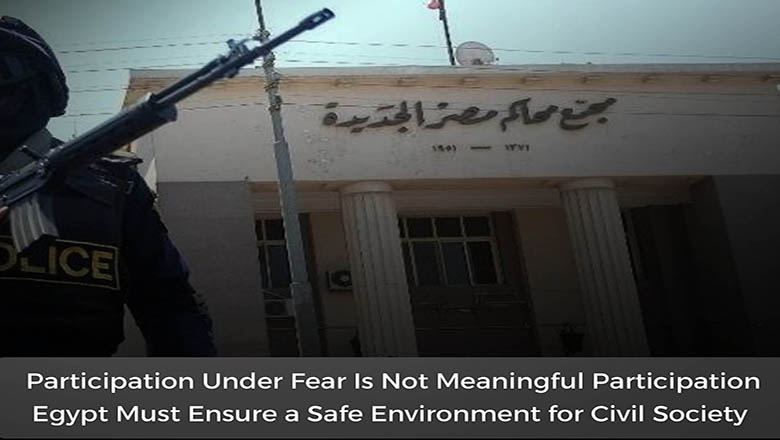
Participation Under Fear Is Not Meaningful Participation: Egypt Must Ensure a Safe Environment for Civil Society
Joint statement
Oct 30, 2026
The undersigned organizations are seriously alarmed by the recent wave of attacks against the free press and independent fact-checkers in Egypt, which sends a chilling message of fear to civil society. This message of fear diametrically opposes repeated calls by Egypt’s Ministry of Foreign Affairs and the Supreme Standing Committee for Human Rights for civil society to engage in consultations on the preparation of Egypt’s second National Human Rights Strategy.
We recognise the importance of independent civil society participation in the Strategy’s development process. Over recent months, the authorities have announced consultations with different stakeholders and invited civil society to submit proposals and recommendations, including through an official online survey dedicated to the second strategy.
These steps are necessary and welcome but insufficient. Recent developments raise serious concerns in this regard.
On 28 and 29 September 2026, six journalists working for the independent fact-checking platform Matsadaash were arrested. Amnesty International subsequently reported that they had been held in undisclosed locations, denied access to their families and lawyers, and subjected to torture and other ill-treatment in an attempt to obtain self-incriminating statements.
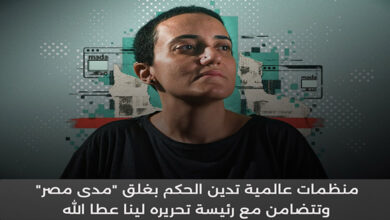
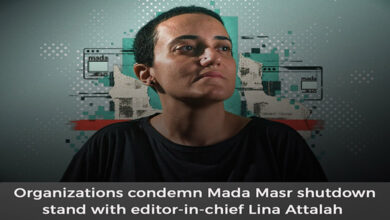
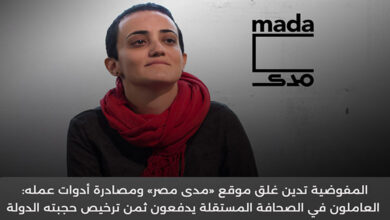
On 27 October 2026, a New Cairo misdemeanour court convicted Lina Attalah, editor-in-chief of the independent media outlet Mada Masr, of operating a website without a licence, imposed a fine of three million Egyptian pounds, and ordered the closure of the website and confiscation of its equipment. The case followed other legal proceedings linked to Mada Masr’s journalistic work and has raised renewed concerns over the pressure facing independent media.
These developments are difficult to reconcile with calls for civil society to participate openly in shaping the country’s future human rights agenda. Meaningful participation requires more than opening channels for consultation. It also requires an environment in which human rights defenders, journalists, researchers and independent organisations can speak openly about human rights concerns, including the most sensitive ones, without fear of prosecution, detention, reprisals or other consequences arising from their legitimate work.
Civil society cannot be asked to identify shortcomings, document violations and propose reforms concerning freedom of expression, criminal justice, torture, detention, fair-trial guarantees and other sensitive issues while those expected to contribute may fear consequences for speaking frankly.
Participation under fear is not meaningful participation.
A National Human Rights Strategy should take place in a context allowing for candid discussion of structural problems and necessary reforms. Civil society organisations, journalists, human rights defenders and researchers should not have to moderate their analysis or recommendations in order to reduce potential risks to their staff or institutions.
Meaningful participation therefore requires clear safeguards against reprisals and genuine space for independent voices to contribute not only comments on predetermined priorities, but also to help shape those priorities and to participate in the implementation, monitoring and evaluation of the strategy.
For this reason, the environment in which the second National Human Rights Strategy is being developed is part of the credibility of the process itself.
The undersigned organisations call on the Egyptian authorities to ensure an environment where civil society, journalists, human rights defender, and researchers can express their views freely and safely. In particular, all individuals and organizations participating the government’s Human Rights Strategy development process should be protected from reprisal and have their inputs considered transparently. The authorities should clarify how recommendations are assessed and reflected in the final strategy.
The second National Human Rights Strategy will ultimately be judged not only by the progress made under its final text, but also by the conditions under which it is developed and by whether independent and critical voices are genuinely able to participate.
At a time when the authorities are asking civil society to contribute its vision for the future of human rights in Egypt, the clearest message they can send is that participation itself will not place anyone at risk.
Opening civic space does not begin with a survey or an invitation to participate. It begins with ensuring that civil society can speak freely, criticise policy and propose reform without fear.
Signatories:
Committee for Justice (CFJ)
Egyptian Commission for Rights and Freedoms (ECRF)
DIGNITY