


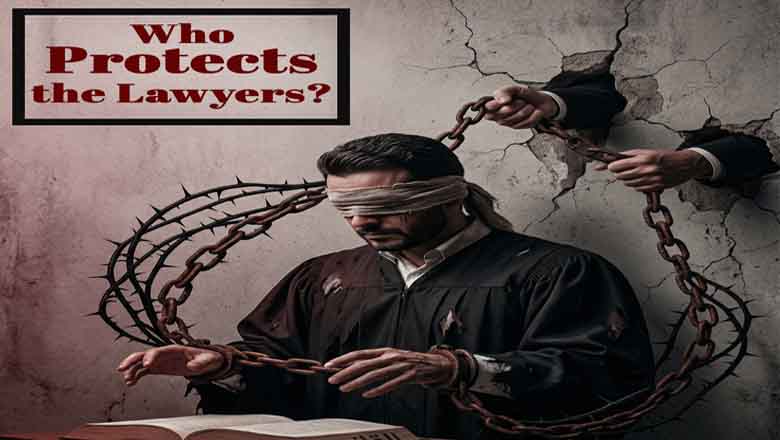
The Egyptian Commission for Rights and Freedoms has issued an analytical paper titled “Who Protects Lawyers?: Violations, Arrests, and Torture by the Police, Prosecution, and Judiciary, and the Silence of the Bar,” which addresses the violations practiced against lawyers as one of the pillars of the justice system.
This comes as part of the outputs of the “Between the Cage and Exile” campaign launched by the Egyptian Commission for Rights and Freedoms to shed light on decisions to refer political detainees to trial after long years of investigation before the prosecution and pretrial detention.
The paper examines the state of the legal profession and the significant deterioration it has witnessed, particularly after 2013. Lawyers in Egypt—especially those defending defendants in politically charged cases—face systematic restrictions and work under constant threat. They are subjected to assaults and violations of their rights in various forms, including intimidation and harassment, interference in the exercise of their professional duties, arbitrary detention, and judicial persecution. These practices reflect a systematic approach by the Egyptian authorities aimed at weakening and restricting the role of lawyers and dismantling one of the last lines of defense against the ongoing crackdown on human rights in Egypt.
The report is based on monitoring and documenting cases of lawyers referred to trial during the period from September 2024 to December 2025, drawing on case files and lawyers’ testimonies to highlight the violations they have faced as a result of their professional work, expression of their opinions, or engagement in legitimate political activities. It demonstrates how lawyers have shifted from being partners in achieving justice to becoming targeted parties. The report also points to the Bar Association’s failure to fulfill its role in defending its members, as well as the reluctance of the general syndicate and its branches to confront these systematic violations, which has led to hollowing out the syndicate’s substance and has cast a shadow over the functioning of the judiciary in both political and criminal cases alike.
The report recommends a set of urgent measures, foremost among them: the release of lawyers detained pending trial or in pretrial detention due to the legitimate performance of their professional duties, expression of their opinions, or engagement in lawful political activities; conducting an impartial and transparent investigation into allegations of enforced disappearance, torture, and ill-treatment against lawyers; and bringing perpetrators to justice. The report also calls for ending judicial harassment of lawyers and enabling them to practice their profession in a safe environment, and for the Bar Association to assume its responsibility in safeguarding the rights and interests of its members, leading to the amendment of relevant legislation and the cessation of security-driven practices that hinder access to justice, in accordance with the Egyptian Constitution and international human rights law.